Relocating from Ireland to Portugal
Moving to Portugal from Ireland allows Irish citizens to live, work, study, or retire in another EU member state under EU free movement rules, without following the residence visa pathways that generally apply to non-EU nationals.
Relocation can still involve local registration and practical administration. Relevant topics can include a Portuguese tax identification number (Número de Identificação Fiscal – NIF), EU residence registration, healthcare access, tax residence, housing, and banking.
Portugal offers a different climate and housing environment from Ireland while remaining within the EU legal and banking framework. Ireland and mainland Portugal normally use the same time zone, and direct air connections provide relatively straightforward travel between the two countries.
For broader context on relocation, housing, healthcare, education, and everyday life, see the Moving to Portugal overview.
Connect With a Portugal-Based Specialist
Investment
NEXT STEP
Connect With a Portugal-Based Specialist
Residency
Visas & Permits
Taxation
Personal & Cross-Border
Property
Purchase & Investment
Relocation
Planning &
Settling In
Portugal Vista may connect readers with trusted independent professionals.
Looking for Guidance?
Table of Contents
Why Irish Citizens Consider Moving to Portugal
Climate and Everyday Lifestyle
Portugal has a warmer and generally drier climate than Ireland, although conditions vary considerably between regions. Winters are typically milder in southern and coastal areas, while northern Portugal experiences cooler and wetter conditions.
Climate, access to outdoor spaces, walkable town centres, cafés, beaches, and different seasonal patterns can all influence relocation decisions and everyday routines.
Remote Work and EU Mobility
Irish citizens benefit from EU free movement rights when living and working in Portugal, subject to the registration and other requirements applicable to their circumstances.
Ireland and mainland Portugal normally use the same time zone, which can simplify communication with Irish employers, clients, family members, and institutions. Tax residence, employment arrangements, and social security coordination can nevertheless require separate consideration when professional activity is carried out from Portugal.
Housing and Cost Considerations
Housing costs vary substantially across both Portugal and Ireland. In Portugal, Lisbon, Cascais, Porto, parts of the Algarve, and other high-demand areas can differ considerably from smaller cities, inland regions, and less internationally oriented housing markets.
Comparisons between the two countries therefore depend on the specific locations, property type, rental or purchase arrangements, and household requirements involved.
Retirement and Lifestyle Relocation
Irish citizens considering retirement in Portugal may evaluate factors such as climate, healthcare, housing, taxation, transport, proximity to Ireland, and everyday living costs.
For broader context on retirement-related planning, see the page on retirement planning in Portugal.
Life in Portugal vs Ireland
Housing and Comfort Standards
Housing prices and rental costs vary considerably by location in both countries. Within Portugal, differences between major urban or coastal markets and smaller cities or inland regions can be substantial.
Older Portuguese properties may have different insulation, heating, ventilation, and humidity characteristics from homes familiar to some Irish residents. A milder outdoor climate does not necessarily mean that all properties provide the same level of winter indoor comfort.
Healthcare
Portugal has a public healthcare system, the SNS (Serviço Nacional de Saúde), alongside private healthcare providers. Access to and registration with the SNS depend on the person’s circumstances, eligibility, and the documentation required under the applicable rules.
Some international residents also use private healthcare or private insurance alongside public healthcare access. Waiting times, provider availability, and access to specialist services vary by region and healthcare system.
Administration and Daily Life
Administrative procedures in Portugal can involve online platforms, documentary requirements, appointments, in-person services, and interaction with different public authorities depending on the matter involved.
Processing times, appointment availability, and administrative requirements vary by institution, municipality, region, and type of procedure.
Transport and Distances
Lisbon and Porto have extensive public transport networks, including metro, rail, bus, and other services. Smaller towns, rural areas, and some suburban or coastal locations can be more dependent on private vehicles.
Direct flights between Ireland and Portugal are available on a range of routes, including connections involving Lisbon, Porto, and Faro, although routes and frequencies can vary seasonally.
Residency and Legal Status for Irish Citizens
EU Free Movement
Irish citizens can enter and reside in Portugal under EU free movement rules. Where an EU citizen remains in Portugal for more than three months, residence registration requirements apply according to the person’s circumstances and the conditions established under the applicable rules.
This differs from the residence visa framework that generally applies to nationals of countries outside the EU, EEA, and Switzerland.
CRUE Residence Certificate
The Certificado de Registo de Cidadão da União Europeia (CRUE) is the registration certificate issued to qualifying EU citizens by the municipality, or Câmara Municipal, for residence beyond the initial period covered by EU free movement rules.
The certificate records the EU citizen’s residence in Portugal and may be relevant when demonstrating registered residence in administrative or private-sector contexts.
The certificate is generally valid for up to five years, or for the intended period of residence where that period is shorter. After five years of continuous legal residence, an EU citizen may acquire a right of permanent residence subject to the applicable rules. Portuguese nationality is a separate legal process governed by the nationality rules and eligibility conditions in force.
Common Administrative Registrations
Depending on the individual’s circumstances, administrative matters can include the NIF, EU residence registration, healthcare registration, social security registration, and tax-related records.
More detail is available in the pages on how the NIF process works and when a NIF is required in Portugal.
Tax Residence
Portuguese tax residence is determined under the criteria established by Portuguese tax law. These include tests relating to presence in Portugal and the availability and use of a dwelling as a habitual residence, among other applicable rules, with the outcome depending on the individual’s circumstances during the relevant period.
Individuals who are Portuguese tax residents are generally subject to Portuguese taxation on worldwide income, subject to domestic tax rules, applicable exemptions or special regimes, and the relevant provisions of the Portugal–Ireland double taxation agreement.
Irish tax residence, domicile, pensions, rental income, investments, and other cross-border financial matters may also remain relevant depending on the circumstances.
Tax residence, pension treatment, and cross-border reporting obligations vary depending on individual circumstances and financial structure. This section provides general informational context only.
Moving Process from Ireland to Portugal
Before Relocation
Relocation planning can involve housing, healthcare continuity, income arrangements, schooling, pets, driving matters, and the documents that may be relevant to registration and administration in Portugal.
Temporary accommodation may also be used while comparing regions and longer-term housing options. Pricing and availability can vary seasonally, particularly in coastal areas and larger cities.
After Arrival
Depending on the circumstances, administrative matters after arrival can include EU residence registration, healthcare registration, banking, utilities, tax records, and address information held by Portuguese or Irish institutions.
The applicable procedures are not necessarily completed in a universal sequence. Different matters may involve municipalities, the Portuguese Tax and Customs Authority, healthcare services, Social Security, IMT, or other institutions.
Banking and Everyday Payments
Irish bank accounts can generally be used for SEPA transfers and euro payments, while a Portuguese bank account may be convenient for certain local payments, direct debits, salaries, tax matters, or other financial arrangements.
Portuguese banks commonly request identification, a NIF, proof of address, and information relating to income or financial circumstances, although requirements vary by institution and customer profile. Additional detail is available in the pages on bank accounts in Portugal, opening an account from abroad, and documents commonly requested by Portuguese banks.
Locations Irish Citizens May Consider in Portugal
Lisbon and Coastal Areas Near the Capital
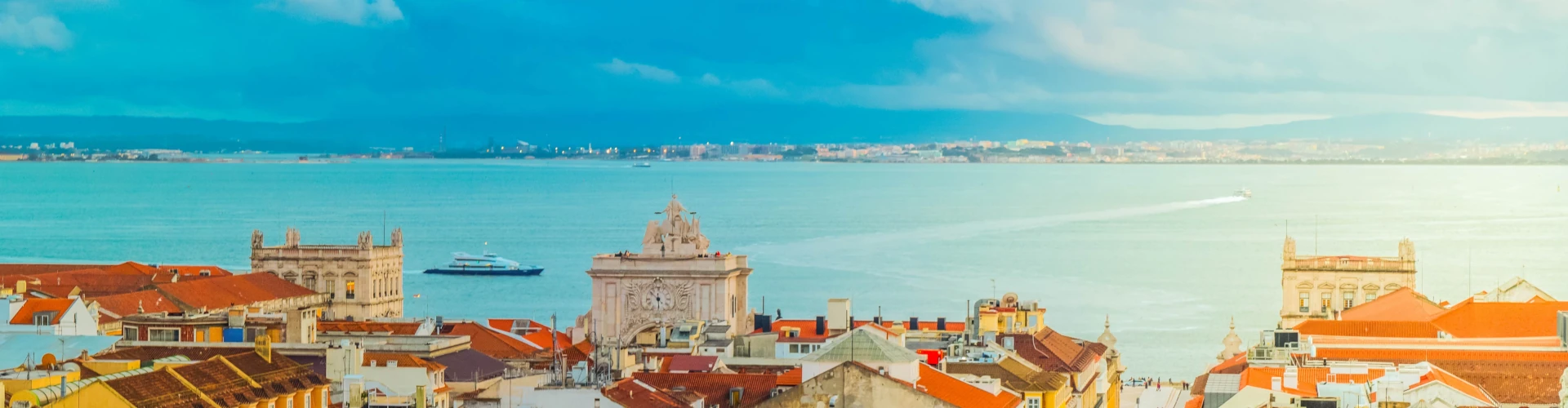
Lisbon offers international schools, public transport, healthcare infrastructure, coworking facilities, an international airport, and a broad range of professional and everyday services.
Cascais, Oeiras, Sintra, and other areas around the capital provide different combinations of housing, coastal access, transport connections, schools, and urban or residential environments. Property-related context is available on the page about the property market in Lisbon.
Porto and Northern Portugal
Porto provides a compact urban environment, public transport, universities, healthcare infrastructure, cultural amenities, and international connections. Its climate is generally cooler and wetter than southern Portugal.
Braga, Guimarães, and other northern cities provide different combinations of housing, regional services, universities, transport, and access to urban centres. Property-related context is available on the page about buying property in Porto.
The Algarve
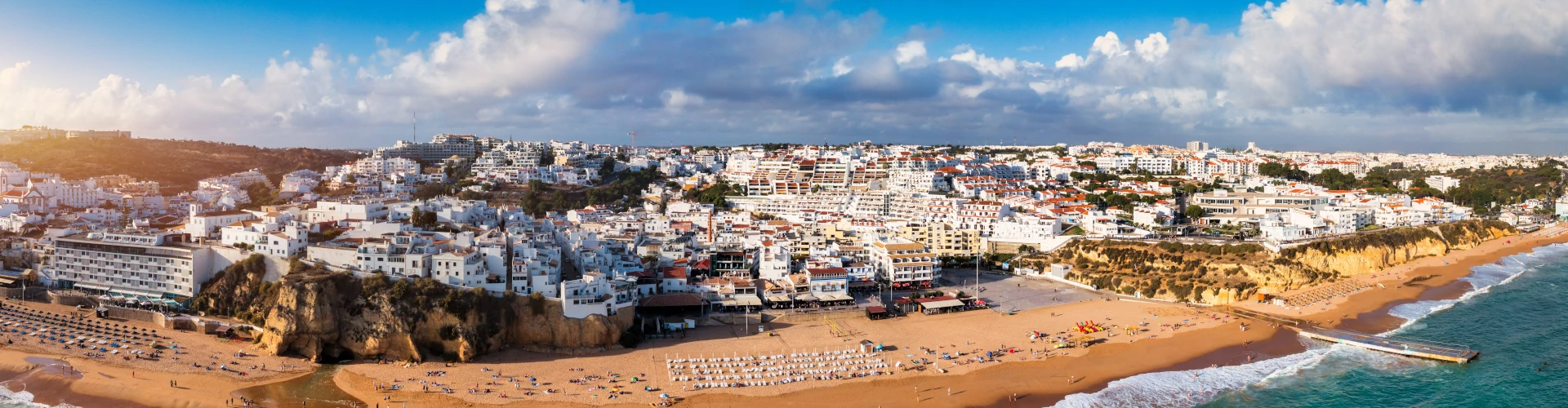
The Algarve offers a coastal environment, a mild climate, tourism and leisure infrastructure, international communities, and access to Faro Airport.
Conditions vary considerably across the region, including housing costs, healthcare access, transport, year-round services, and the effects of tourism seasonality. More detail is available on the page about housing in the Algarve.
Central Portugal and Smaller Coastal Towns
Locations such as Coimbra, Aveiro, Nazaré, Peniche, Évora, Figueira da Foz, and areas of the Silver Coast provide alternatives to Portugal’s largest urban and international centres.
Housing, transport, healthcare access, schooling, employment opportunities, and English-language services vary considerably between locations.
Cost of Living: Portugal vs Ireland
Cost-of-living comparisons between Portugal and Ireland depend heavily on the locations being compared, housing arrangements, household composition, transport, healthcare, energy use, and spending patterns.
Some households may encounter lower costs in Portugal for categories such as dining, public transport, or housing outside higher-cost areas. Other expenses, including private education, imported goods, car ownership, international travel, premium property, and energy use, can reduce that difference.
Regional variation is substantial in both countries. Lisbon, Cascais, parts of the Algarve, Porto, Dublin, and other high-demand markets should not be treated as representative of national housing or living costs.
Healthcare in Portugal for Irish Citizens
Public Healthcare
Access to and registration with the Portuguese public healthcare system depend on the person’s circumstances, eligibility, and the documentation required under the applicable rules.
The SNS includes primary care, hospital services, emergency care, and specialist services, with access pathways and waiting times varying by service, region, and clinical circumstances.
EHIC and Temporary Stays
The European Health Insurance Card (EHIC) can provide access to state-provided healthcare that becomes medically necessary during a temporary stay in Portugal, under the conditions applicable to the Portuguese public healthcare system.
The EHIC is intended for temporary stays and does not replace the healthcare registration or other arrangements applicable when Portugal becomes a person’s country of residence.
Private Healthcare
Private healthcare is also available in Portugal, although provider availability varies by region. Some international residents use private providers or private insurance alongside access to the public system.
Private healthcare charges and insurance premiums depend on factors such as provider, age, coverage, exclusions, medical history, and policy terms.
Education Options for Irish Families
Public and Private Schools
Portuguese public schools operate mainly in Portuguese, while private schools may offer bilingual programmes or other educational models depending on the institution and location.
For families relocating with children, relevant considerations can include curriculum continuity, language, school availability, admission requirements, transport, and examination systems.
International Schools
International schools are available in areas including Lisbon, Cascais, Porto, and the Algarve. Depending on the institution, programmes can include British, American, International Baccalaureate, Portuguese, or other curricula.
For households relocating with children, schooling, healthcare, housing, and residence matters can overlap with wider family relocation considerations.
Taxation and Financial Planning
Ireland–Portugal Tax Coordination
The Double Taxation Agreement between Ireland and Portugal coordinates taxing rights and provides mechanisms relevant to the avoidance of double taxation between the two countries.
Treatment can differ depending on the type of income involved, including employment income, self-employment income, pensions, dividends, rental income, or capital gains, as well as the person’s residence status and other circumstances.
NHR and IFICI
Portugal’s former Non-Habitual Resident (NHR) regime is no longer generally available to new applicants under the previous rules, although transitional provisions may apply in qualifying situations.
The Incentive for Scientific Research and Innovation (IFICI) is a separate tax regime with specific eligibility requirements linked to activities, functions, entities, and other conditions defined by Portuguese law. Eligibility and tax treatment depend on the rules in force and the individual’s circumstances.
Pensions and Long-Term Planning
Irish pension income may continue to be payable to a person living in Portugal depending on the pension scheme, provider rules, and payment arrangements involved.
The tax treatment of state, occupational, and private pension income can differ according to the type of pension, tax residence, domestic tax rules, and the provisions of the Portugal–Ireland double taxation agreement.
Cross-border tax and pension treatment may differ depending on residence status, income structure, pension type, and treaty provisions.
Connect With a Portugal-Based Specialist
Investment
NEXT STEP
Connect With a Portugal-Based Specialist
Residency
Visas & Permits
Taxation
Personal & Cross-Border
Property
Purchase & Investment
Relocation
Planning &
Settling In
Portugal Vista may connect readers with trusted independent professionals.
Looking for Guidance?
Moving to Portugal from Ireland Checklist
This checklist summarises common practical themes involved in relocation from Ireland to Portugal.
- EU residence registration and CRUE requirements
- NIF, banking, and relevant local registration matters
- Housing options by region, transport access, and seasonality
- Healthcare eligibility, registration, and private coverage where relevant
- Irish and Portuguese tax residence, pensions, and cross-border financial matters
- Schooling and family considerations for households relocating with children
- Driving licence, vehicle, pets, and transport arrangements where applicable
- Irish banking, pensions, utilities, and address information affected by relocation
Administrative requirements and registration procedures may vary depending on municipality, residence circumstances, and individual circumstances.
When Professional Support May Be Useful
Moving to Portugal from Ireland can involve connected matters including EU residence registration, tax residence, pensions, healthcare, housing, banking, employment, and family arrangements.
Qualified independent professionals may, within their respective areas of competence and depending on the circumstances, provide support in relation to legal, tax, financial, property, or administrative matters.
Portugal Vista provides general information and may, where appropriate, connect readers with qualified independent professionals. Professional services are provided directly by the relevant professionals.
Related information is available on moving to Portugal with family and retiring in Portugal.
Connect With a Portugal-Based Specialist
Investment
NEXT STEP
Connect With a Portugal-Based Specialist
Residency
Visas & Permits
Taxation
Personal & Cross-Border
Property
Purchase & Investment
Relocation
Planning &
Settling In
Portugal Vista may connect readers with trusted independent professionals.
Looking for Guidance?
Frequently Asked Questions
Can Irish citizens live in Portugal?
Irish citizens can live in Portugal under EU free movement rules. Where an EU citizen remains in Portugal for more than three months, residence registration requirements apply according to the person’s circumstances and the applicable rules.
Do Irish citizens need a visa for Portugal?
Irish citizens do not require a residence visa to move to Portugal because Ireland is an EU member state. EU residence registration requirements may apply where the person remains in Portugal for more than three months.
What is the CRUE in Portugal?
The CRUE is the registration certificate issued to qualifying EU citizens by the municipality for residence in Portugal beyond the initial period covered by EU free movement rules.
Can Irish citizens work remotely from Portugal?
Irish citizens can exercise EU free movement rights in Portugal, subject to the rules applicable to their circumstances. Remote work can also have implications for tax residence, employment arrangements, and social security coordination.
Can Irish citizens access healthcare in Portugal?
Access to and registration with the Portuguese public healthcare system depend on the person’s circumstances, eligibility, and the documentation required under the applicable rules. The EHIC applies to medically necessary state-provided healthcare during qualifying temporary stays rather than replacing residence-based healthcare arrangements.
Can Irish pensions be paid while living in Portugal?
Irish pension income may continue to be payable while living in Portugal depending on the pension scheme, provider rules, and payment arrangements. Tax treatment depends on the pension type, tax residence, domestic rules, and applicable treaty provisions.
Is a Portuguese bank account required?
A Portuguese bank account is not always legally required. Irish and other SEPA accounts can be used for euro payments, while a Portuguese account may be convenient for certain local payments, direct debits, salaries, or tax matters.
Can Irish citizens drive in Portugal?
A valid Irish driving licence is an EU driving licence recognised in Portugal. Administrative requirements can still arise depending on residence, licence validity, renewal, licence category, or vehicle-related circumstances.
Is Portugal cheaper than Ireland?
Cost comparisons depend on the locations being compared, housing, household circumstances, transport, healthcare, energy use, and spending patterns. Some expenses may be lower in Portugal, while others can be similar or higher depending on region and lifestyle.
Where do Irish citizens usually live in Portugal?
Irish citizens may consider locations including Lisbon and Cascais, Porto and northern Portugal, the Algarve, Central Portugal, and smaller coastal towns. Location choice depends on factors such as housing, schools, healthcare, transport, work, climate, and lifestyle priorities.
This guide was prepared with care to provide clear, factual information based on official Portuguese and EU sources relevant to free movement, taxation, healthcare, driving, and local residence registration. Official procedures, eligibility criteria, tax rules, and administrative practice can change over time.